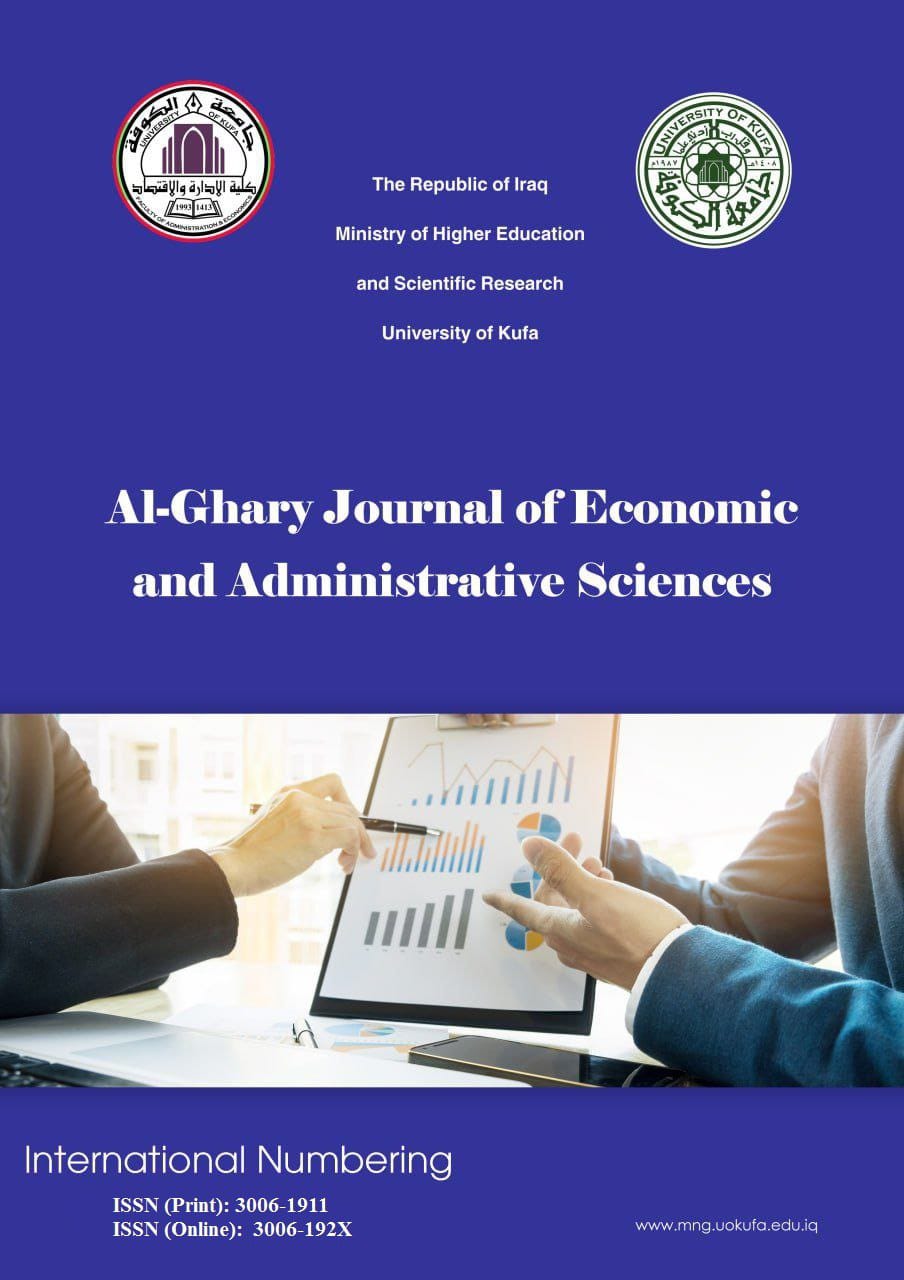
Evaluating accounting education programs in light of international standards and labor market requirements
DOI:
https://doi.org/10.36325/ghjec.v22i2.20585Keywords:
Keywords: Accounting education, labor market, economic unitsAbstract
This research aims to assess the compatibility of current accounting education with labor market standards and requirements, in light of rapid economic and technological transformations. The research addresses the gap between academic accounting curricula and labor market needs by analyzing the opinions of employers, graduates, and professionals in the field.
A research methodology combining quantitative and qualitative analysis was used, using questionnaires and interviews with a diverse sample of stakeholders. The research found an urgent need to develop curricula to include modern technical skills such as electronic accounting systems and data analysis, in addition to enhancing graduates' practical and applied skills.
The research recommends establishing partnerships between universities and labor market institutions, and regularly updating curricula to keep pace with professional developments. This contributes to improving graduates' efficiency and meeting labor market needs more effectively.
Downloads
References
1. Al-Aroud, S. F. (2021). Evaluation of accounting education and the extent of compatibility and the labor market needs (Field study: External auditors auditing in Jordan). International Journal of Entrepreneurship, 25, 1–10.
2. Al Dulamy, J., & Hamadi, A. (2022). Accounting education and its role in light of contemporary trends in the accounting profession—An applied study. In Proceedings of 2nd International Multi-Disciplinary Conference Theme: Integrated Sciences and Technologies, IMDC-IST 2021, 7-9 September 2021, Sakarya, Turkey.
3. "AlMunifi, A., & Aleryani, A. (2019). Knowledge and skills level of graduate civil engineers: Employers’ and graduates’ perceptions. International Journal of Engineering Pedagogy, Vol. 9 No. 1 (2019) 84–101".
4. Christensen, J., et al. (2019). Implementing team-based learning (TBL) in accounting courses. Accounting Education, 28(2), 195–219.
5. "Dolce, V., et al. (2020). The soft skills of accounting graduates: Perceptions versus expectations. Accounting Education, 29(1), 57–76".
6. Masood, A. (2022). Accounting education and labor market needs in Saudi Arabia. SMART Journal of Business Management Studies, 18(1), 12–21.
7. Methaneethorn, J., & Methaneethorn, J. (2022). A systematic review of using team-based learning in a pharmacokinetics course. Pharmacy Education, 22(1), 63–72.
8. Mott, J., & Peuker, S. (2015). Using team-based learning to ensure student accountability and engagement in flipped classrooms. In 2015 ASEE Annual Conference & Exposition.
9. "Oliver, B., et al. (2011). Accounting graduates and the capabilities that count: Perceptions of graduates, employers, and accounting academics in four Australian universities. Journal of Teaching and Learning for Graduate Employability, 2(1), 2–27".
10. "Phipps, T. (2019). Team-based interactive student learning for accounting courses. Journal of Higher Education Theory and Practice, 19(6)".
11. Wakelin-Theron, N., Ukpere, W. I., & Spowart, J. (2019). Attributes of tourism graduates: Comparison between employers' evaluation and graduates' perceptions. Tourism Review International, 23(1–2), 55–69.
12. Mohieldin ,M.(2018) :”leverging technology to achieve the sustainable development Goals” World Bank Blogs. , https://bit.Ly /3k.Cgwrr
Downloads
Published
Issue
Section
License
Copyright (c) 2026 علي كريم خضير ابو زبيبه

This work is licensed under a Creative Commons Attribution 4.0 International License.
which allows users to copy and create excerpts and summaries, and thus create new scientific works from the article or modify it and benefit from the scientific material, provided that the user refers to the link to the original article