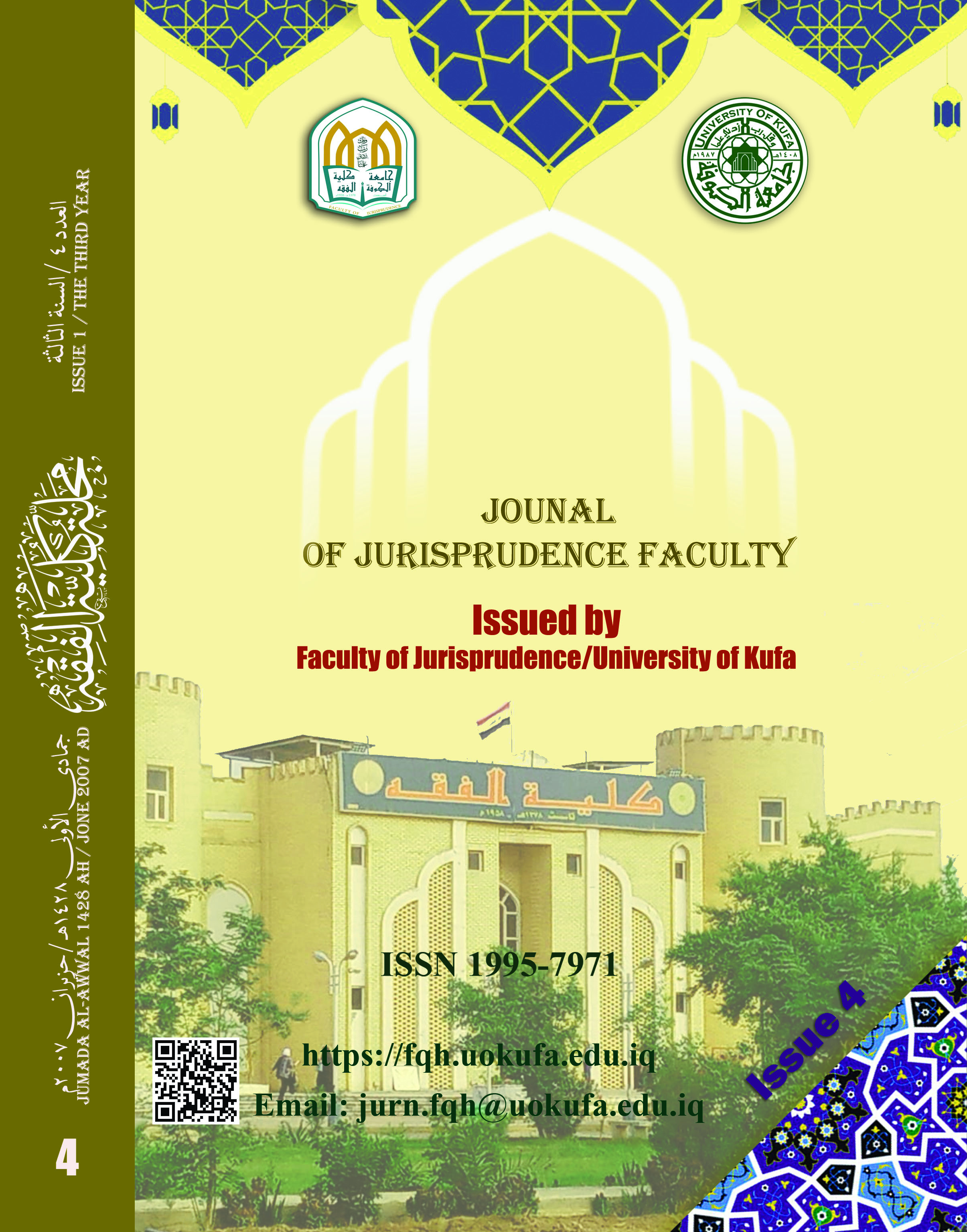
Historical factors for the emergence of ascetic schools in the Islamic East
and their impact on the emergence of Sufism
DOI:
https://doi.org/10.36324/fqhj.vi4.8369Keywords:
: Worker, school, asceticism, bright, mysticism.Abstract
This research shows the Muslims' asceticism in worldly matters, their belittling of them, their underestimation of their importance, their lack of being affected by their adornments and pleasures, their preference for what is stated in the heavens and their guidance by it, and their firm steps towards success on the Day of Judgment, and winning the pleasure of Allah Almighty. Asceticism in worldly matters is righteousness in this world and success in the Hereafter, and this is what every Muslim who believes in Allah and the Sunnah of His Noble Messenger (may Allah bless him and grant him peace) desires. Islamic asceticism was born with the birth of Islam and was and still is one of the noble morals, strengthened and established by our Prophet Muhammad (may Allah bless him and grant him peace), and asceticism appeared in Islam and is part of a tolerant belief whose essence is morality, justice, and equality among the members of one society, and this is what the noble companions (may Allah bless him and grant him peace) commanded, just as they believed in the principles of their true Islamic religion.
Downloads
Downloads
Published
Issue
Section
License
Copyright (c) 2007 Dr. Abdul Redha Hassan Jiyad Al-Hussainawi

This work is licensed under a Creative Commons Attribution 4.0 International License.
How to Cite